

AI Gateway for Enterprise: Control, Monitor and Scale AI Usage Across Your Organisation
Why Every Enterprise Needs an AI Gateway
As organisations adopt ChatGPT, Claude, Gemini, open-source models and other AI tools, one challenge becomes very clear:
AI usage grows faster than governance.
Different teams start using different models. Developers call multiple APIs directly. Business units experiment with different tools. Costs become difficult to track. Security teams worry about data leakage. Management wants to know who is using AI, how much it costs and whether usage is properly controlled.
This is where an AI Gateway becomes critical.
An AI Gateway acts as the central control layer between your applications, users, teams and AI model providers.
Instead of every system calling OpenAI, Anthropic, Google, Azure, AWS or open-source model endpoints directly, all AI traffic passes through one governed gateway.
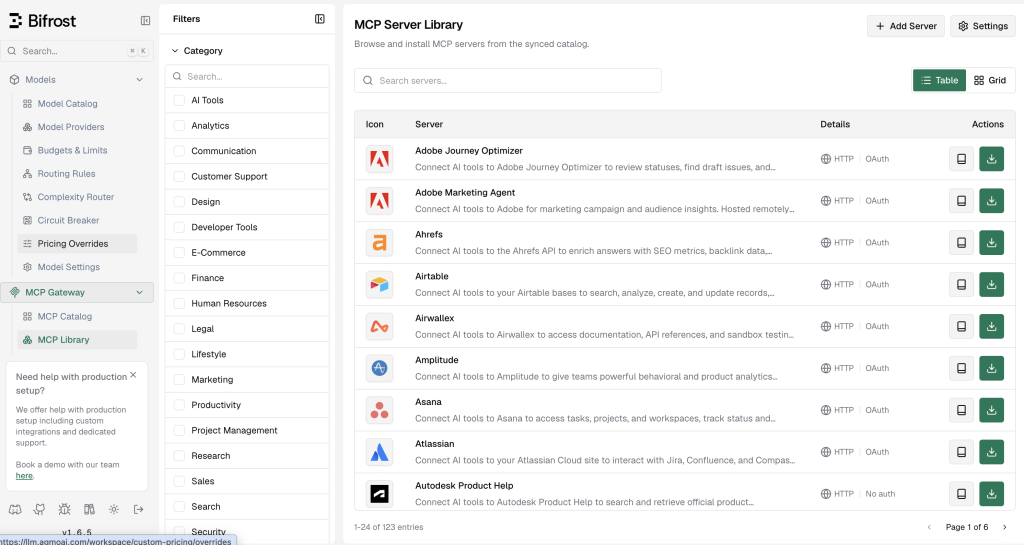
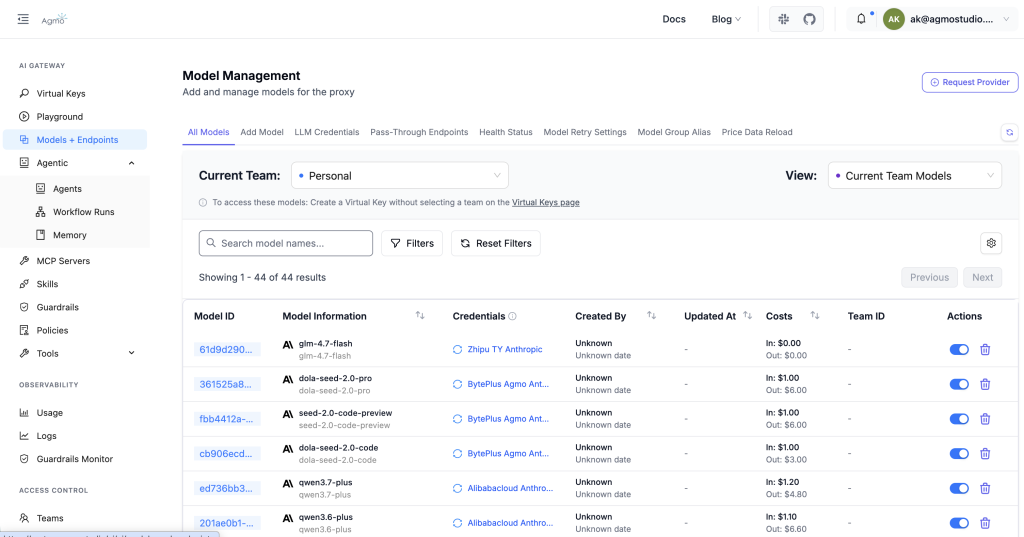
At Agmo, we have deployed internal AI gateway architectures using technologies and patterns such as LiteLLM and Bitfrost / Bifrost, enabling organisations to manage AI usage, control cost, apply quotas, monitor performance and scale AI adoption safely.
What Is an AI Gateway?
An AI Gateway is not an AI model.
It is the infrastructure layer that manages how AI models are accessed.
Think of it as the “API management layer” for AI.
It helps organisations control:
- who can access AI models
- which models each team can use
- how much each user or department can spend
- which applications are calling AI APIs
- what happens when a model fails
- how requests are logged and monitored
- how sensitive usage is governed
- how costs are allocated across teams
- how model access is standardised
Without an AI Gateway, AI adoption can become fragmented, expensive and difficult to govern.
With an AI Gateway, organisations gain visibility, control and scalability.
Why Direct AI API Usage Becomes a Problem
At the early stage, direct AI API usage feels simple.
A developer gets an API key.
A team builds a chatbot.
Another team builds a document summariser.
A third team experiments with another model provider.
But once AI usage grows, several problems appear.
1. Cost Becomes Unclear
Different projects use different API keys.
Different teams use different models.
Some prompts consume large token volumes.
Some workflows run repeatedly in the background.
Without central tracking, management cannot clearly answer:
- Which team is spending the most?
- Which use case is consuming the most tokens?
- Which model is most expensive?
- Which application is generating unnecessary cost?
- Is any AI workflow running out of control?
2. No Quota Management
One of the biggest AI risks is uncontrolled usage.
A poorly designed loop, large batch job or overactive agent can consume a large AI budget very quickly.
With an AI Gateway, organisations can apply quota controls such as:
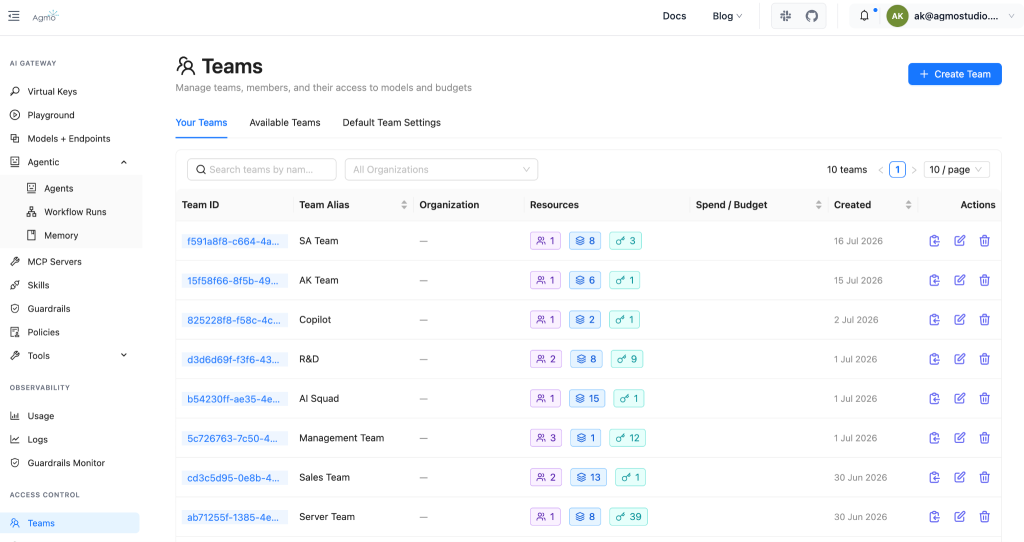
- user-level quota
- team-level quota
- department-level quota
- project-level quota
- application-level quota
- daily, weekly or monthly usage limits
- model-specific budget caps
This prevents AI usage from becoming an open-ended cost exposure.
3. No Central Governance
Without a gateway, every team may implement its own AI access pattern.
This creates inconsistent governance.
Some teams may log requests.
Some may not.
Some may use approved models.
Some may use unapproved models.
Some may store prompts safely.
Some may expose sensitive data accidentally.
An AI Gateway provides a central place to enforce AI usage policies.
4. Vendor Lock-In Becomes Harder to Manage
Different models are good at different tasks.
Some teams may prefer OpenAI.
Some use Claude.
Some need Gemini.
Some workloads may run on open-source models.
Some organisations may require Azure-hosted models or private deployment.
Without an AI Gateway, switching between models can require application-level changes.
With an AI Gateway, applications can be designed to call one standard interface while the gateway handles model routing.
This gives organisations more flexibility and reduces vendor lock-in.
5. No Reliable Observability
AI systems are different from traditional software systems.
You need to understand not only whether the API call succeeded, but also:
- which model was used
- how many tokens were consumed
- how long the response took
- how much the request cost
- whether the output failed
- whether fallback was triggered
- whether the prompt caused errors
- whether one user or workflow is abusing usage
An AI Gateway gives technical teams the observability layer needed to run AI in production.
What Agmo Builds: Enterprise AI Gateway Architecture
Agmo helps organisations design and deploy AI Gateway architectures for internal AI adoption, enterprise applications and production AI systems.
Our internal AI Gateway deployments use technologies and patterns such as LiteLLM and Bitfrost / Bifrost, allowing organisations to centralise AI access across multiple models and providers.
The goal is simple:
Give every team access to AI, but with proper control.
Key Benefits of an AI Gateway
1. Quota Management
Quota management is one of the most important benefits of an AI Gateway.
Instead of giving every user unlimited access, organisations can define controlled usage limits.
Examples:
- Sales team: monthly AI usage quota
- Customer support bot: daily token quota
- R&D team: higher quota for experimentation
- Finance team: restricted access to selected models
- Interns or trainees: limited trial quota
- Production applications: dedicated budget and alert threshold
This helps organisations avoid uncontrolled AI spending while still encouraging adoption.
2. Budget and Cost Control
AI cost can grow silently.
An AI Gateway helps track usage and cost by:
- user
- team
- department
- project
- application
- model
- provider
- environment
This enables proper chargeback or showback reporting.
For example, management can see:
- how much the HR chatbot costs monthly
- how much the customer service AI assistant consumes
- how much each department spends on AI
- whether GPT-4-class models are being overused
- whether cheaper models can handle simpler tasks
This turns AI cost from a black box into a manageable operating expense.
3. Rate Limiting
Rate limiting protects the organisation from traffic spikes, accidental loops and abusive usage.
With rate limits, the gateway can control:
- requests per minute
- tokens per minute
- concurrent requests
- model-specific limits
- user-specific limits
- application-specific limits
This is especially important for production AI systems such as customer service bots, AI agents, internal copilots and document processing pipelines.
4. Centralised Model Access
An AI Gateway allows organisations to access multiple AI providers through one central layer.
This may include:
- OpenAI
- Azure OpenAI
- Anthropic Claude
- Google Gemini
- AWS Bedrock
- open-source models
- private or on-premise models
Instead of every application integrating with each provider separately, the gateway standardises model access.
This makes development faster and governance easier.
5. Model Routing
Different tasks require different models.
A simple classification task may not need the most powerful model.
A complex reasoning task may require a stronger model.
A confidential workflow may require a private deployment.
A high-volume workflow may require a lower-cost model.
An AI Gateway can support routing strategies such as:
- route simple tasks to cheaper models
- route complex tasks to stronger models
- route sensitive workloads to approved environments
- route by department or application
- route by cost, latency or availability
- route by model capability
This helps organisations optimise both performance and cost.
6. Fallback and Reliability
AI providers may experience downtime, rate limits or temporary errors.
Without a gateway, each application must handle failures separately.
With an AI Gateway, fallback can be handled centrally.
For example:
- if Model A fails, route to Model B
- if one provider reaches rate limit, use another provider
- if a high-cost model is unavailable, use a backup model
- if production traffic spikes, apply controlled degradation
This improves reliability for AI-powered applications.
7. API Key Management
Direct API key sharing is risky.
An AI Gateway reduces the need to distribute provider API keys across teams and systems.
Instead, the gateway manages provider credentials centrally and issues controlled access to internal users or applications.
This improves:
- security
- access control
- key rotation
- auditability
- environment separation
- vendor credential protection
8. Usage Monitoring and Analytics
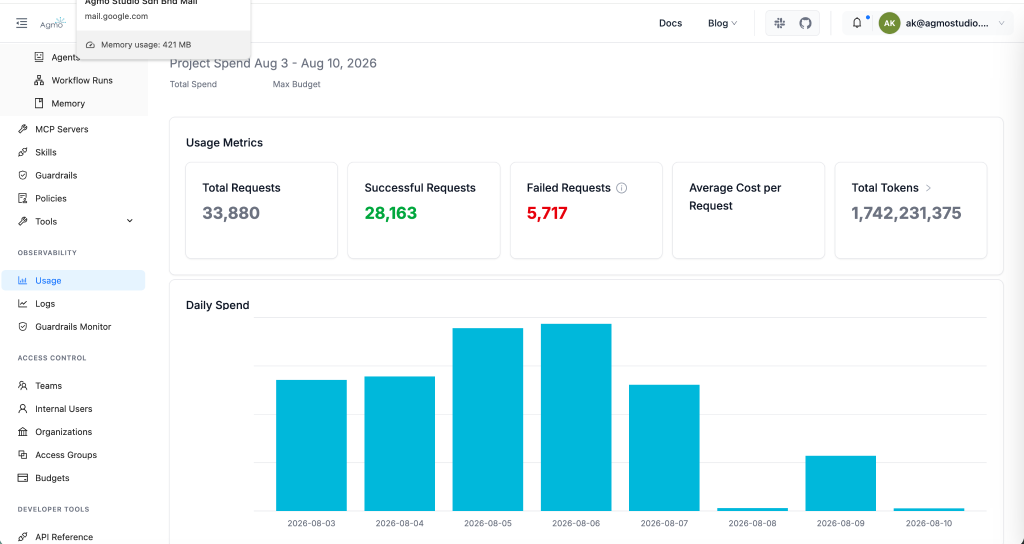
An AI Gateway provides visibility into AI usage across the organisation.
Dashboards can show:
- total requests
- token usage
- cost by model
- cost by department
- latency
- error rates
- top users
- top applications
- quota consumption
- failed requests
- fallback events
This helps IT, finance, governance and management teams understand how AI is being used.
9. Audit Logs and Compliance
For enterprise AI adoption, auditability is important.
An AI Gateway can help record:
- who made a request
- when the request happened
- which application was used
- which model was called
- how many tokens were consumed
- whether the request succeeded
- whether policy rules were triggered
This supports internal governance, investigation, compliance review and responsible AI management.
10. Safer AI Adoption Across Teams
When AI usage is uncontrolled, organisations may become cautious and slow down adoption.
An AI Gateway gives leadership more confidence because usage can be monitored and controlled.
This enables broader AI adoption across:
- HR
- finance
- legal
- sales
- marketing
- customer service
- operations
- engineering
- management teams
The result is not less AI usage.
The result is safer, more scalable AI usage.
Common Use Cases for AI Gateway
Internal ChatGPT / Claude Access Management
Organisations can provide employees with controlled AI access through a central gateway.
This allows teams to use AI while management controls quota, models, budget and usage policies.
Enterprise AI Assistant Platform
If an organisation builds multiple AI assistants, the gateway becomes the central backend for all model calls.
Examples:
- HR assistant
- IT helpdesk assistant
- finance policy assistant
- procurement assistant
- legal assistant
- customer support copilot
RAG and Knowledge Search Applications
For Retrieval-Augmented Generation systems, the gateway manages model usage, cost, fallback and logging across knowledge assistant applications.
AI Agent Workflows
AI agents can consume many model calls.
An AI Gateway helps control agent behaviour by applying budget caps, rate limits, audit logs and routing policies.
Software Development Copilots
Engineering teams can use AI through a governed gateway that tracks usage by team, project and environment.
Customer-Facing AI Systems
For customer-facing AI chatbots or AI voice agents, the gateway ensures reliability, cost control and observability.
AI Gateway for Management: Why Business Leaders Should Care
AI Gateway is not only a technical topic.
It is a business control mechanism.
For management, it answers critical questions:
- How much are we spending on AI?
- Which teams are using AI?
- Which use cases are delivering value?
- Are we using approved models?
- Are costs under control?
- Are users exceeding reasonable limits?
- Can we scale AI safely?
- Can we switch providers if needed?
- Can we audit AI usage?
This makes the AI Gateway a key component of enterprise AI governance.
AI Gateway for IT: Why Technical Teams Need It
For IT and engineering teams, an AI Gateway provides:
- standard API access
- central provider management
- model routing
- fallback
- rate limiting
- quota control
- logging
- observability
- security controls
- environment separation
- easier integration across applications
This reduces the burden on each project team and creates a common AI infrastructure layer.
Agmo’s AI Gateway Implementation Approach
Agmo can help organisations design and deploy AI Gateway solutions through a practical implementation roadmap.
1. AI Usage Discovery
We review current and planned AI usage across departments, systems and applications.
2. Gateway Architecture Design
We define the gateway architecture, model providers, access patterns, routing rules, quota structure and governance controls.
3. LiteLLM / Bitfrost / Bifrost Deployment
We deploy an internal AI Gateway using suitable gateway technologies and patterns, such as LiteLLM and Bitfrost / Bifrost, based on the organisation’s requirements.
4. Model Provider Integration
We integrate approved providers such as OpenAI, Azure OpenAI, Anthropic Claude, Gemini, AWS Bedrock or private models.
5. Quota and Budget Setup
We configure quota management, rate limits, budget caps and department-level usage policies.
6. Dashboard and Monitoring
We implement dashboards for usage monitoring, cost tracking, latency, errors and model performance.
7. Security and Governance
We configure access control, API key management, audit logs, environment separation and policy enforcement.
8. Application Integration
We connect the AI Gateway to chatbots, copilots, RAG systems, AI agents and internal applications.
9. Training and Handover
We train IT, governance and business stakeholders to operate and monitor the gateway.
10. Continuous Optimisation
We help optimise model usage, cost, routing and performance over time.
Why Work With Agmo
Agmo is not only an AI consulting company.
We are an AI builder and enterprise technology implementation partner.
We have hands-on experience deploying internal AI gateway architectures, including LiteLLM and Bitfrost / Bifrost-style gateway setups, for real organisational AI adoption.
Organisations choose Agmo because we bring:
- practical AI gateway deployment experience
- enterprise software engineering capability
- OpenAI and Claude ecosystem experience
- AI agent, RAG and chatbot implementation experience
- cloud and infrastructure capability
- governance and security mindset
- local Malaysian support
- production delivery experience
We help organisations move from AI experimentation to controlled, scalable AI infrastructure.
When Should You Implement an AI Gateway?
You should consider an AI Gateway if:
- multiple teams are using AI models
- your AI cost is growing but hard to track
- developers are managing too many API keys
- you need user or department quotas
- you want to control which models can be used
- you need audit logs for AI usage
- you are building multiple AI applications
- you need fallback between providers
- you want to reduce vendor lock-in
- you are preparing for enterprise-wide AI adoption
If AI is becoming part of your organisation’s daily operations, an AI Gateway should become part of your AI infrastructure.
Call to Action
If your organisation is using OpenAI, Claude, Gemini, Azure OpenAI, AWS Bedrock or open-source models, now is the right time to build a proper AI Gateway.
Agmo can help you deploy an internal AI Gateway that supports:
- quota management
- budget control
- rate limiting
- model routing
- fallback
- monitoring
- audit logs
- API key management
- governance
- secure enterprise AI adoption
Start with an AI Gateway Discovery Workshop.
In the workshop, we will help define:
- your current AI usage
- your approved model providers
- your quota and budget structure
- your security and governance requirements
- your application integration points
- your dashboard and reporting needs
- your implementation roadmap
Build AI at scale — with control, visibility and confidence.
Contact Agmo at our contact form to explore AI Gateway implementation for your organisation.