

From Solar PV Management to Circular Economy and Carbon Intelligence
Clean energy is no longer just about installing solar panels or publishing ESG reports. For businesses, developers, utilities, government agencies, and sustainability teams, the real challenge is turning sustainability commitments into measurable, trackable, and operational digital systems.
That is where Agmo Group comes in.
Through our clean energy and ESG technology portfolio, Agmo helps organizations digitize the full sustainability value chain — from solar PV project management, solar inverter integration, and renewable energy certificate management, to circular economy platforms, AI recycling hubs, and embodied carbon calculation.
Our mission is simple: help organizations move from ESG intention to ESG execution.
Powering Clean Energy Transformation with Gtrons
Agmo has a joint venture with Solarvest called Gtrons, focused on delivering digital platforms for the clean energy ecosystem.
Through Gtrons, we offer technology solutions that help clean energy players manage projects, assets, certification, data, and operational workflows more efficiently.
1) Vestech PMIS: Solar PV Project Management Information System
Solar PV projects involve many moving parts: site surveys, installation timelines, financial tracking, technical documentation, contractor updates, and post-installation monitoring.
Vestech PMIS is designed to support solar PV project teams with a structured digital platform for managing residential solar installation workflows and project timelines.
The platform helps teams:
- Track solar installation progress
- Manage project milestones and documentation
- Improve coordination between internal teams, contractors, and customers
- Provide better visibility across project status and financial progress
- Support operational control from application to installation
For solar companies scaling across many projects, this matters because manual tracking quickly becomes a bottleneck. A digital PMIS gives management the visibility needed to move faster, reduce delays, and improve customer experience.
2) Saxon REC: Renewable Energy Certificate Management Portal
As more companies commit to sustainability goals, renewable energy certificates are becoming an important part of corporate ESG strategy.
Saxon REC is a renewable energy certification management portal that helps businesses purchase, manage, and track renewable energy certificates online.
The platform supports organizations that want to:
- Reduce carbon footprint reporting gaps
- Support renewable energy adoption
- Manage REC-related transactions digitally
- Improve transparency around sustainability claims
- Streamline certificate management and reporting
For corporates, this is especially valuable because sustainability commitments must be backed by traceable digital records. Saxon REC helps turn REC management into a structured, auditable workflow.
3) Solar Inverter Integration: Turning Energy Assets into Real-Time Data
Clean energy systems are only as valuable as the data they produce.
Agmo also supports solar inverter integration, enabling solar platforms to collect and standardize inverter data for monitoring, reporting, and operational decision-making.
This allows clean energy operators to:
- Monitor solar generation performance
- Track asset health and system status
- Consolidate data across inverter brands
- Build dashboards for operations and reporting
- Support alerts, analytics, and maintenance workflows
For solar asset owners and operators, inverter integration is critical. It turns a solar installation into a connected energy asset that can be monitored, optimized, and scaled.
Building Circular Economy Platforms: Riiicycle
Clean energy is only one part of sustainability. Waste reduction, recycling, and circular economy participation are equally important.
Agmo built Riiicycle, an ESG-driven green lifestyle rewards platform that encourages communities to recycle, participate in green education, join sustainability events, and earn reward points for eco-friendly actions.
Riiicycle connects:
- Individuals
- Recycling centers
- Merchants
- Event organizers
- Sustainability partners
The goal is to make recycling more rewarding, measurable, and community-driven.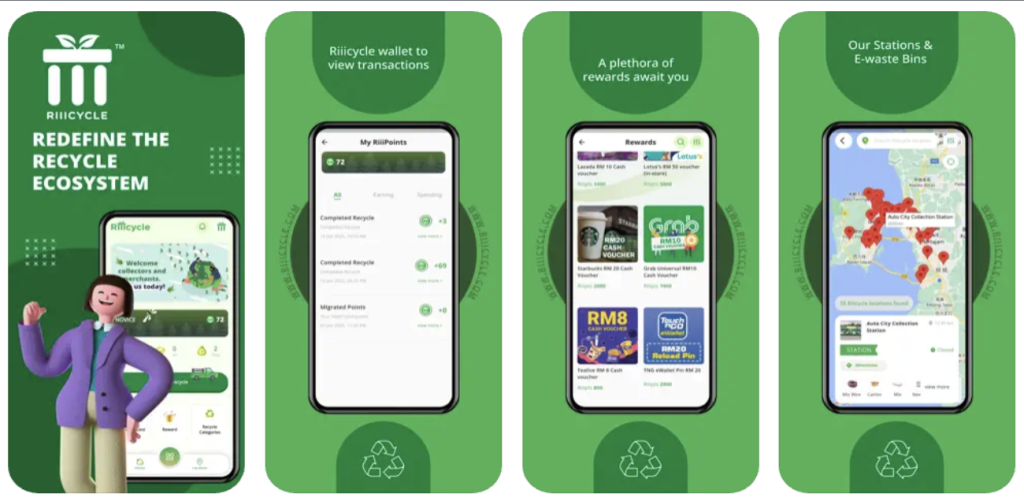
Official E-Waste Collection at TRX
Riiicycle also supports e-waste collection initiatives, including its role as an official e-waste collector at TRX.
This matters because e-waste is one of the fastest-growing sustainability challenges. A digital circular economy platform helps organizations and communities move beyond awareness campaigns into actual collection, tracking, and reward-based participation.
AI Recycling Hubs with Penang State Government at Menara KOMTAR
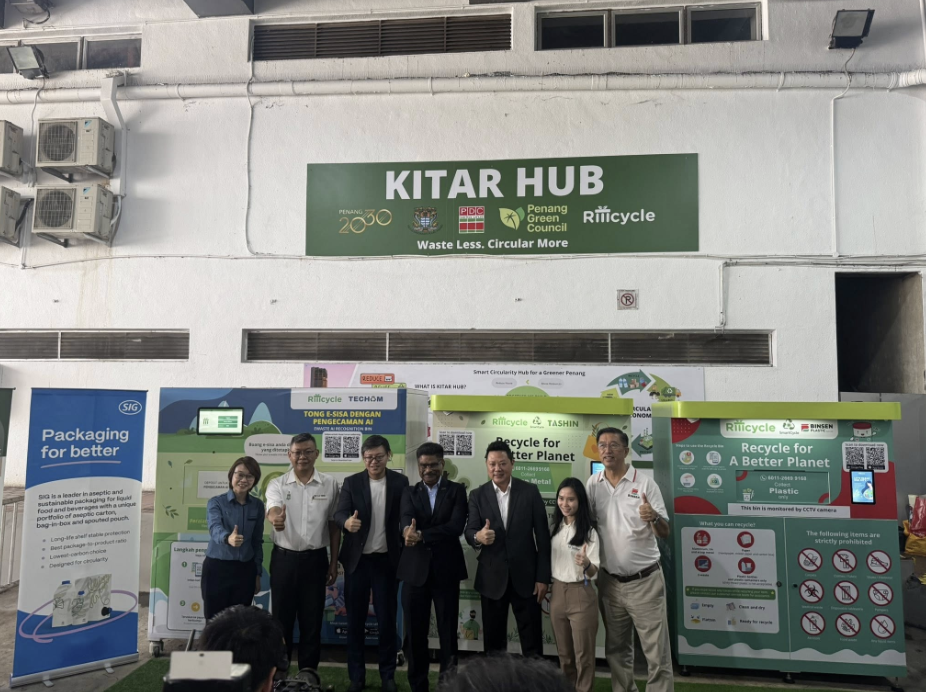
Agmo also launched AI recycling hubs with the Penang State Government at Menara KOMTAR, bringing together technology, recycling infrastructure, and public-sector sustainability goals.
These hubs are designed to make recycling more accessible and measurable by combining:
- Smart recycling stations
- Digital participation tracking
- Reward-based engagement
- Community sustainability activation
- Data visibility for ESG and circular economy reporting
For government agencies, councils, townships, and large asset owners, this model shows how recycling infrastructure can become smarter, more engaging, and easier to measure.
It is not just about placing bins. It is about creating a connected recycling ecosystem.
Embodied Carbon Calculation Platform
For construction, infrastructure, and property development, carbon impact starts long before a building is occupied.
Agmo also developed an embodied carbon calculation platform that helps engineering and construction teams assess and compare the embodied carbon of materials such as concrete and steel.
The platform supports:
- Real-time embodied carbon calculation
- Auto data mapping to EPD and AusLCI databases
- Integration with engineering workflows
- Interactive dashboards and reports
- Role-based access control
This helps project teams make better sustainability decisions earlier in the design and procurement process.
For developers and construction firms, this is a major advantage. Instead of treating carbon calculation as a late-stage reporting exercise, teams can use data to compare material options, evaluate trade-offs, and support greener design decisions from the start.
Why Clean Energy and ESG Need Digital Platforms
Many organizations want to become more sustainable, but struggle with execution.
Common challenges include:
- Solar project data scattered across spreadsheets
- REC tracking handled manually
- Solar inverter data locked in separate systems
- Recycling campaigns without measurable participation data
- ESG reporting that depends on manual collection
- Carbon calculations performed too late in the project lifecycle
Agmo solves these challenges by building digital platforms that make sustainability trackable, operational, and scalable.
Who We Help
Agmo’s clean energy and ESG solutions are relevant for:
- Solar PV companies
- Renewable energy developers
- Property developers
- Construction and engineering firms
- Government agencies
- Smart city teams
- ESG departments
- Facility owners
- Retail malls and commercial buildings
- Recycling and circular economy operators
Whether you are managing solar assets, launching a green rewards program, tracking e-waste, or building a carbon calculation platform, Agmo can help you move from manual ESG effort to digital ESG execution.
Why Choose Agmo for Clean Energy Digitalization
Agmo brings a unique combination of software engineering, AI capability, IoT integration, enterprise platform development, and sustainability domain experience.
Our clean energy and ESG portfolio spans:
- Solar PV project management
- Renewable energy certificate platforms
- Solar inverter integration
- Circular economy and recycling rewards
- E-waste collection platforms
- AI recycling hubs
- Embodied carbon calculation
This means we do not just build apps. We build the digital infrastructure that helps clean energy and ESG programs scale.
Call to Action
If your organization is planning to digitize clean energy, ESG, recycling, or carbon management initiatives, Agmo can help you build the platform layer.
Talk to us if you need to:
- Manage solar PV projects digitally
- Integrate solar inverter data
- Launch a renewable energy certificate platform
- Build a circular economy or recycling rewards ecosystem
- Deploy AI recycling hubs
- Calculate embodied carbon for construction projects
- Turn ESG reporting into a measurable digital workflow
Let’s build the digital foundation for your clean energy strategy. Talk to us today at our contact form